College is one of the most exciting and challenging transitions a young person can navigate, and for students with disabilities, that transition comes with an extra layer of complexity that rarely gets talked about: clothing. According to the National Center for Education Statistics, more than 20% of undergraduate students in the United States reported having a disability in 2019 to 2020, and the CDC estimates over 4 million U.S. college students currently live with a disability. Many of them are figuring out, often for the very first time, how to manage their own daily dressing routine without the support system they relied on at home. At June Adaptive, we believe that adaptive fashion is not just for older adults or clinical settings. It belongs in residence halls, lecture halls, campus coffee shops, and every corner of student life.
Balancing Independence, Budget, and Accessible Style
Let us be honest: college budgets are tight. Between tuition, housing, textbooks, and the occasional late-night meal, clothing often falls to the bottom of the spending list. For students with disabilities who need adaptive features in their wardrobe, this budget pressure can feel even more acute, especially when adaptive options have historically been harder to find and sometimes more expensive than standard clothing.
The good news is that the adaptive fashion landscape has changed significantly in recent years. Major retailers including Target, Nike, and Tommy Hilfiger have all launched accessible clothing lines, and brands like June Adaptive offer stylish, functional adaptive garments at accessible price points. Budget-friendly adaptive options are also available at retailers like Kohl's, meaning students no longer have to choose between affordability and functionality.
There is also a practical financial case for investing in quality adaptive pieces early. A well-made magnetic closure top or a pair of pull-on pants that genuinely fits your body and your routine is worth more in time saved and frustration avoided than three cheaper items that do not work as well. For students managing chronic conditions or disabilities alongside a demanding academic schedule, streamlining the morning routine is not a luxury. It is a genuine quality-of-life investment.
Here are a few strategies for building an adaptive wardrobe on a student budget:
-
Start with versatile basics. A few well-chosen adaptive essentials, including a magnetic button shirt, pull-on pants, and slip-on shoes, can be mixed and matched across many outfits. Building around a core of versatile pieces reduces the number of items you need to buy while keeping your options flexible.
-
Check disability services resources. Some campus disability services offices maintain lists of financial resources, grants, or voucher programs that can help offset the cost of adaptive equipment and clothing. It is worth asking before the semester starts.
-
Look for HSA and FSA eligibility. Some adaptive clothing items may be eligible for purchase through a Health Savings Account or Flexible Spending Account if they are medically necessary. This can make higher-quality adaptive pieces significantly more affordable for students who have access to these accounts.
Dorm-Friendly Adaptive Clothing Setups
Residence hall living comes with its own set of logistical challenges: small closets, shared bathrooms, communal laundry rooms, and limited counter space. For students with disabilities, these constraints can complicate an already complex dressing routine. The good news is that adaptive clothing, by design, tends to be lower-maintenance and easier to manage in exactly these kinds of environments.
Garments with magnetic closures, elastic waistbands, and pull-on designs require fewer tools, less counter space, and less time than their button-and-zipper counterparts. For a student getting ready to make it to an 8 a.m. class in a shared bathroom down the hall, that simplicity is not just convenient. It is essential. Wrinkle-resistant and machine-washable fabrics are also particularly practical in a dorm context, where ironing space is minimal and laundry schedules are shared.
Organizing a dorm wardrobe for ease of dressing takes a little planning but makes a meaningful difference. Keeping frequently worn adaptive pieces at eye level and at the front of the closet removes the need for searching or reaching. Laying out the next day's outfit the night before is a strategy used by occupational therapists across age groups, and it works particularly well in the college environment where morning routines are often rushed.
June Adaptive's Women's Easy-Access Open-Back Snap Closure Adaptive Top is a great example of a dorm-friendly piece. Made from soft, wrinkle-resistant fabric with discreet snap closures, it looks polished straight off a hanger and requires no ironing, no complex fastening, and no overhead lifting to put on. Available at JuneAdaptive.com in sizes XS through 2XL.

Adaptive Outfits for Campus Activities and Long Classes
A college student's day looks nothing like a standard nine-to-five. Back-to-back lectures, lab sessions, club meetings, campus events, and social time can mean eight or more hours of continuous activity, often across very different settings and temperatures. For students with disabilities, building a wardrobe that holds up to that kind of varied, extended use requires intentional choices.
Comfort for extended wear is the first priority. Elastic waistbands and non-restrictive silhouettes are essential for students who spend long periods seated in lecture halls or working at desks. Fabrics that breathe and move without bunching or pulling reduce the physical distraction of clothing during long class sessions. For wheelchair users, seated-fit designs that account for how garments shift during seated use are particularly important for both comfort and appearance throughout the day.
Layering is also a campus essential. Lecture hall temperatures vary widely, and moving between outdoor and indoor spaces multiple times a day requires adaptable clothing. Lightweight adaptive pieces that can be easily added or removed, without requiring overhead movements or complex unfastening, give students with physical disabilities the same temperature-regulation flexibility that their nondisabled peers take for granted.
Here is what to prioritize when building adaptive outfits for a full campus day:
-
Stretch fabrics for seated comfort. Pants and tops with some elastane or spandex content accommodate the full range of posture and movement that a campus day demands, from sitting through a two-hour lecture to walking across a large campus between classes.
-
Easy-access layering pieces. Magnetic snap cardigans or open-front adaptive jackets add warmth and polish without requiring complex dressing maneuvers between activities. They work equally well over a casual t-shirt in the morning as they do over a more formal top for an afternoon presentation.
-
Slip-on footwear that looks put-together. Adaptive footwear with velcro closures or elastic laces gives campus-ready style without the dexterity demands of traditional shoelaces, so students can move quickly between locations without worrying about whether their shoes are secure.

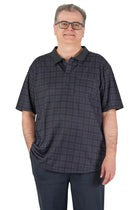
Men’s Adaptive Back-Opening Bamboo Sport Shirt
Transitioning from Parental to Self-Managed Dressing
For many young adults with disabilities, the move to college represents the first time they are fully or primarily responsible for managing their own dressing routine. That transition can be exciting, empowering, and genuinely challenging, all at once. A 2025 report from the National Disability Center found that disabled students frequently cite daily living independence, including personal care and dressing routines, as one of the biggest adjustments they navigate when arriving on campus.
The key to a successful transition is building systems that work for your specific body, schedule, and living situation, rather than simply importing the routine that worked at home. A routine designed around parental assistance may need to be rethought entirely when that support is no longer available every morning. Adaptive clothing is one of the most powerful tools in that redesign, because it shifts the equation away from needing help and toward having the right tools.
Working with the campus disability services office before arriving at college can help students identify what adaptive tools and supports are available and begin planning their independent dressing strategy before the semester begins. Many campuses also have occupational therapists on staff or can refer students to local practitioners who specialize in building independence in daily living activities, including dressing.
The emotional dimension of this transition matters too. Choosing your own clothes, in your own style, without having to ask for help, is a form of independence that carries real psychological weight. Research on adaptive clothing consistently shows that the ability to dress independently contributes meaningfully to self-esteem, sense of control, and overall wellbeing. For college students navigating the social and identity-formation demands of campus life, that independence is worth designing your wardrobe around.
Expressing Personality Through Inclusive Fashion Choices
Here is something that does not get said enough: adaptive clothing can be genuinely stylish, and for young adults, style matters. Fashion is one of the primary ways that college students express identity, signal belonging, and present themselves to a new social world. For students with disabilities, having access to adaptive clothing that actually reflects their personal aesthetic is not a superficial concern. It is a meaningful part of feeling like yourself on campus.
The adaptive fashion industry has evolved significantly in recent years, with modern adaptive garments now blending therapeutic functionality with contemporary fashion trends, ensuring that individuals with disabilities can dress independently while maintaining their personal style preferences. That evolution means that students today have real choices: bold colors, contemporary cuts, and on-trend silhouettes are all available in adaptive formats.
Self-expression through clothing also plays a role in campus social life. For students with disabilities, finding adaptive pieces that reflect their individual style, whether that is minimalist and clean, colorful and expressive, or classic and polished, makes it possible to engage in the social rituals of fashion on equal footing with nondisabled peers. That parity matters in a college environment where first impressions and social connection happen fast.
June Adaptive's clothing line is designed with exactly this in mind. Our pieces are not designed to look medical or clinical. They are designed to look like clothing that anyone would want to wear, because inclusive fashion should be fashion first. When a student with a disability can pick out an outfit based on what they love rather than what they can manage, that is the kind of empowerment that changes how a person moves through the world.

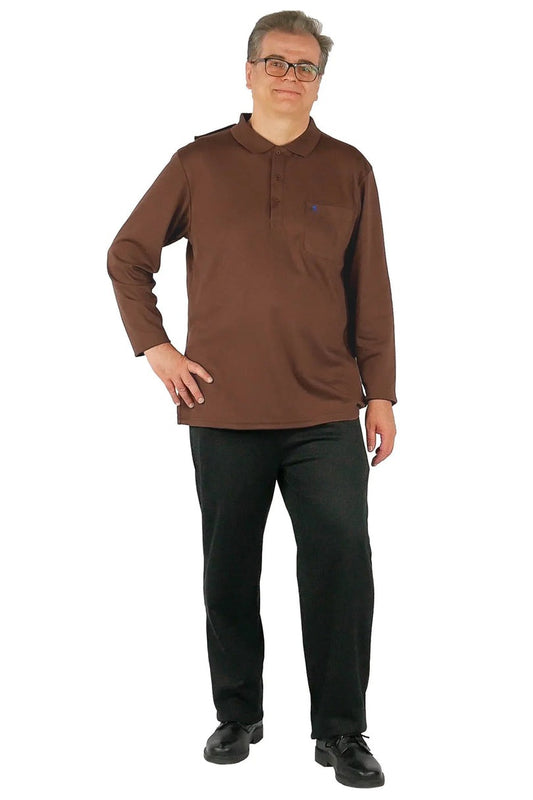
Men’s Back-Overlap Assisted Dressing Twill Pants
Here is what inclusive style-building looks like in practice for college students:
-
Shop by aesthetic, not just by feature. Start with the look you want, then filter for adaptive features within that aesthetic. Many adaptive retailers now organize their collections by style category as well as by need, making it easier to find pieces that feel like you.
-
Mix adaptive and non-adaptive pieces. Not every item in a wardrobe needs to be adaptive. Many students find that a few key adaptive pieces, such as magnetic closure tops or pull-on pants, paired with standard accessories and layers, gives them the flexibility and style range they want without building an entirely separate wardrobe.
-
Follow adaptive fashion communities online. Social media communities built around disability and fashion are active, creative, and genuinely inspiring. Following creators and accounts that center disabled style can provide outfit ideas, brand recommendations, and the kind of peer representation that reminds students that fashionable and accessible are not mutually exclusive.
The college years are a time for figuring out who you are, and your wardrobe is part of that discovery. For students with disabilities, adaptive fashion gives you the tools to make that exploration on your own terms. Whether you are building your first independent wardrobe, looking for pieces that hold up to a demanding campus schedule, or simply trying to find clothing that reflects the person you are becoming, June Adaptive is here to help. Inclusive fashion is not a workaround. It is a starting point.
If you enjoyed this blog, please sign up to the June Adaptive Newsletter below to receive more updates! Share your experience in our 5-minute survey to inform our new adaptive apparel launch. Get a chance to win a $50 gift card Link here