Written by: Fatima Faruq:
Understanding Sensory Friendly Clothing: How Adaptive Fashion Supports Comfort for Autism and ADHD
Sensory comfort can shape how the entire day feels. For many autistic and ADHD individuals, clothing is not just about appearance. It is also about texture, pressure, movement, and how fabric feels against the skin throughout the day.
Details like scratchy tags, stiff seams, tight necklines, or rough fabrics can become overwhelming over time and make it harder to focus, relax, or move comfortably through daily routines. Sensory friendly clothing helps reduce that overload by focusing on softer materials, smoother construction, and more comfortable fits.
Adaptive fashion takes that approach even further by designing clothing that feels easier to wear, move in, and tolerate for longer periods of time. In this guide, we explore how sensory friendly clothing supports comfort for autistic and ADHD individuals, what features to look for when shopping, and how adaptive fashion can help make school, work, and everyday routines feel less stressful.
Why Sensory Comfort Matters in Everyday Routines
Many people experience clothing as background noise throughout the day, but for individuals with sensory sensitivities, certain textures and materials can feel impossible to ignore.
A rough seam, stiff waistband, or scratchy label may create constant discomfort that builds throughout the day and affects concentration, mood, and emotional regulation. Even small irritations can become overwhelming when they are repeated over hours of movement and activity.
Sensory friendly clothing focuses on reducing those distractions by creating softer, calmer experiences through fabric choice and garment construction.
When clothing feels more comfortable, people often have more energy available for school, work, social interaction, and daily routines.
Features That Can Make Clothing Feel More Comfortable
The most helpful sensory friendly features are often the smallest ones. Thoughtful design details can completely change how a garment feels throughout the day.
Some important features to look for include:
• Flat or smoother seams
• Tagless labels
• Soft breathable fabrics
• Flexible waistbands
• Relaxed fits
• Quieter fabrics with less stiffness
• Gentle stretch for easier movement
Adaptive clothing often combines several of these features together to help reduce friction, pressure, and unnecessary sensory discomfort.
The goal is not simply softer clothing. It is clothing that feels easier to tolerate and more predictable throughout the day.
Comfort and Style Can Exist Together
Sensory friendly clothing does not have to look clinical or different from everyday fashion. Many adaptive pieces are designed to feel modern, comfortable, and versatile while still supporting sensory needs.
Soft knits, smoother construction, and adaptive dressing features can help create clothing that feels easier to wear without sacrificing personal style.
Pieces like the Women’s Lace Top with Back Overlap combine softer fabrics and accessible dressing features with a polished look that works well for everyday wear.
Comfort often becomes easier to maintain when clothing feels both physically comfortable and emotionally familiar.
Why Familiar Clothing Can Feel Safer
Many autistic and ADHD individuals prefer wearing the same outfit repeatedly because familiarity helps reduce uncertainty and sensory stress. A trusted fabric or fit can feel calming and predictable in a world that often feels overstimulating.
Introducing new clothing usually works best when changes happen gradually.
Keeping similar fabrics, fits, and textures while slowly introducing small differences can help make transitions feel less overwhelming. Even switching only the color or neckline at first may feel more manageable than introducing a completely different style all at once.
Adaptive clothing can help support this process by offering softer, more consistent construction designed around comfort and reduced sensory irritation.
Choosing Sensory Friendly Clothing for School, Work, and Daily Life
Different environments create different sensory demands, which is why comfort matters across routines throughout the day.
For school or work settings, breathable fabrics and smoother interiors can help reduce distraction during long hours of sitting, movement, or concentration. Softer waistbands and flexible fits may also feel more comfortable during busy or overstimulating days.
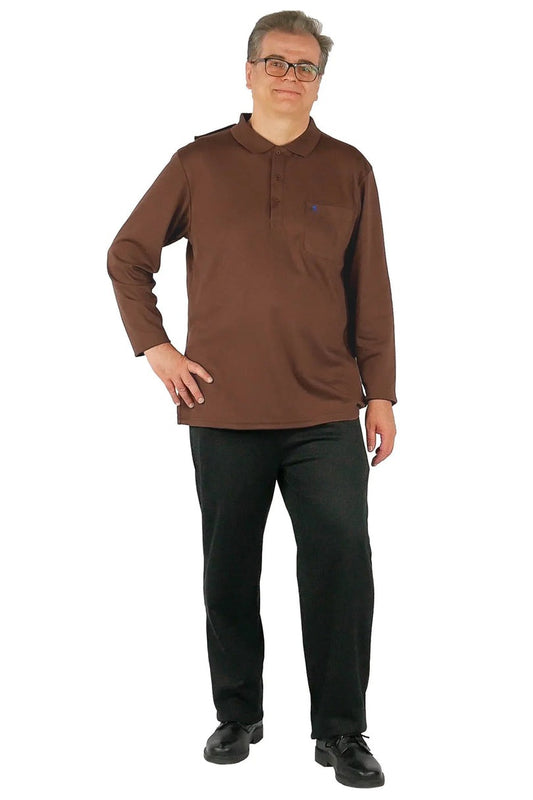
The Men’s Long Sleeve Henley Shirt with Back Overlap is designed with accessible features that help simplify dressing while maintaining a relaxed everyday feel that works well across different routines.
At home, softer loungewear, adaptive tops, and comfortable layering pieces can help create a calmer sensory environment that supports relaxation and recovery from overstimulation.
Adaptive Clothing Can Help Reduce Daily Stress
When clothing feels uncomfortable, distracting, or difficult to tolerate, it can affect the entire day. Small sensory irritations often build over time and contribute to frustration, fatigue, or emotional overload.
Adaptive fashion helps reduce those stress points by simplifying how clothing feels and functions throughout the day.
The Women’s Diamond Neck Tee with Back Overlap is designed with soft fabrics and adaptive features that help create a more comfortable dressing experience while reducing unnecessary sensory discomfort.
Supportive features may seem simple individually, but together they can create routines that feel calmer, more manageable, and easier to move through comfortably.
Comfort Should Be Collaborative
Sensory comfort is personal, and no single fabric or style works for everyone. The person wearing the clothing should always guide what feels comfortable, safe, and manageable for them.
Offering choices without pressure, allowing time to adjust to new clothing, and paying attention to sensory preferences can help create more positive experiences around dressing.
Sometimes the best adaptive clothing choice is simply the one that feels easiest to wear consistently and comfortably.
Inclusive design works best when it listens to real sensory experiences instead of assuming everyone experiences clothing the same way.
Top June Adaptive Picks for Sensory Friendly Comfort
Sensory friendly adaptive clothing is designed to help reduce irritation, simplify dressing, and create more comfortable daily routines through softer fabrics and thoughtful construction.
Some June Adaptive favorites that support sensory friendly comfort include:

Women’s Lace Top with Back Overlap
 Men’s Long Sleeve Henley Shirt with Back Overlap
 Women’s Diamond Neck Tee with Back Overlap
Sensory friendly clothing can make everyday routines feel calmer, more comfortable, and easier to manage for autistic and ADHD individuals. Small details like softer fabrics, smoother seams, flexible fits, and adaptive dressing features can help reduce unnecessary sensory stress throughout the day.
Adaptive fashion continues to move toward more thoughtful, inclusive design that supports both comfort and independence without sacrificing personal style. When clothing feels better physically, it often becomes easier to focus, participate, and move through daily life with greater confidence and ease.