Written By: Shreeya Shah
Comparing Rare Beauty and Tilt Beauty: What Sets Accessible Brands Apart
The beauty industry has long overlooked a significant portion of its customer base: the more than 61 million adults in the United States living with a disability, according to the Centers for Disease Control and Prevention. That's starting to change, and two brands are leading that charge with more than good intentions. Rare Beauty and Tilt Beauty have each built their identities around the idea that makeup should work for every body, not just the ones marketing departments have historically catered to. At June Adaptive, where accessibility is at the heart of everything we do, we're excited to break down what makes these brands stand apart and why their approach matters far beyond the beauty counter.
Packaging Design Philosophies and Implementations
If you've ever struggled to twist open a mascara wand with stiff fingers, or fumbled with a tiny perfume atomizer when your hands weren't cooperating, you already understand the problem both of these brands are trying to solve. The difference is in how each one got there and what their design process actually looks like.
Rare Beauty's accessible packaging story began almost by accident. When founder Selena Gomez launched the brand in 2020, she was already managing arthritis in her hands caused by lupus. The instinct to create packaging that was easier to grip and open came naturally. Rounded caps, soft matte finishes, and lightweight materials were built into the brand's DNA from the start. But when customers with dexterity challenges began flooding social media with feedback about how usable the products were, Rare Beauty took a deliberate step forward.
The result was the Rare Beauty Made Accessible initiative, developed in partnership with the Casa Colina Research Institute. Occupational therapists and participants with upper extremity disabilities tested prototypes and provided direct feedback, resulting in documented improvements across the product line. The 2025 debut of Rare Beauty's first fragrance, Rare Eau de Parfum, showed just how seriously the brand was taking this commitment. Rather than following the standard one-finger atomizer design used by virtually every perfume on the market, Rare Beauty spent more than two years developing a custom bottle with a broad, flat surface that can be pressed using multiple fingers, the palm of a hand, or even the forearm. It includes a low-resistance twist-lock closure instead of a traditional pull-off lid.
Tilt Beauty, launched in February 2025 by then 21-year-old Aerin Glazer, took a different path: building accessibility in from day one, not as a retrofit or an initiative added after the brand was already established. Glazer, who was diagnosed with juvenile psoriatic arthritis, spent nearly five years developing and testing the brand's packaging before its launch. Every component is custom-tooled, which allowed the team to incorporate features that standard off-the-shelf containers simply cannot offer. The result earned Tilt Beauty the distinction of being the first beauty brand to receive the Arthritis Foundation's Ease of Use certification, an independent testing and verification process that confirms a product is genuinely easy to open, hold, and apply for people living with arthritis or chronic pain.
Here is what each brand brings to the table when it comes to accessible design:
-
Rare Beauty uses rounded, soft-matte caps designed for minimal resistance, easy-to-remove applicators shaped for precise application, and a fragrance bottle engineered for multi-point contact that eliminates reliance on single-finger pressing. The brand has also built in the ability to open select products with one hand.
-
Tilt Beauty features ergonomic, patented packaging with grippy textures and magnetic closures, braille embossed on every product carton, and the Atkinson Hyperlegible font developed by the Braille Institute on its website to support low-vision users. It also uses easy-tear packaging strips to reduce unboxing barriers.
-
Both brands engaged the disability community not as an afterthought, but as a central part of their design process. Whether through formal research partnerships or years of personal experience, the lived knowledge of people with disabilities shaped every decision.
The philosophical difference between them is worth noting: Rare Beauty evolved toward deep accessibility over time, while Tilt Beauty was architected around it from scratch. Both approaches have genuine value, and together, they show the industry two legitimate paths forward.
Price Point Strategies for Accessible Products
Accessible design should not come with an inaccessible price tag. That's a principle both brands appear to take seriously, though they approach it differently.
Rare Beauty operates at the mid-range level of the beauty market. Its products typically fall in the $18 to $30 range, putting them in line with other prestige brands sold at Sephora. The 2025 fragrance sits at a higher price point, which is standard for the perfume category. While Rare Beauty is not a drugstore brand, its pricing is consistent with what comparable products from non-accessible brands cost, making the accessibility features effectively free to the consumer.
Tilt Beauty, launched exclusively on its own website before partnering with Revolve Beauty in July 2025, priced its debut products at $28 for the Lashscape Mascara and $26 for the Grip Stick Hydrating Lip Treatment. What makes those numbers more compelling is the refill system: mascara refills are priced at $18 and lip treatment refills at $16. Over time, this refillable approach actually makes Tilt Beauty more affordable to maintain than the average prestige beauty product.
The refill model matters for another reason. For people living on fixed incomes, as many people with disabilities do, a brand that costs more upfront but less over time represents a real financial commitment to accessibility. According to a 2023 report from the American Institutes for Research, people with disabilities are more likely to live in poverty than people without disabilities. Designing with price sustainability in mind is part of designing with inclusion in mind.
Marketing Approaches to Disability Communities
How a brand talks to the disability community reveals a great deal about whether accessibility is a core value or a marketing play. Both Rare Beauty and Tilt Beauty show their commitment in their outreach, though their strategies reflect their different scales and resources.
Rare Beauty has built its community engagement around Selena Gomez's own visibility as a public figure with a chronic illness. Her openness about living with lupus and the physical limitations that come with it has given the brand a level of authenticity that cannot be manufactured. On social media, Rare Beauty has amplified voices from the disability community including Paralympic swimmer Anastasia Pagonis, who spoke candidly about losing her usable vision at 14 and the challenges that created in her beauty routine. This kind of platform sharing is meaningful because it centers disabled consumers rather than simply speaking about them.
The Rare Impact Fund also extends the brand's community commitment into mental health, an area with strong overlap with chronic illness and disability. Rare Beauty donates 1% of all sales to the fund, which has raised over $20 million since 2020 and supports 30 organizations across five continents working to expand youth mental health services. In 2024, the fund helped nonprofit partners reach more than two million people. That's not a side project. It's a structural part of how the company operates.
Tilt Beauty's approach is necessarily more grassroots, befitting a brand just getting started. Aerin Glazer has been deeply personal in her marketing, sharing her own experience with psoriatic arthritis across interviews and social platforms. The brand also earned recognition from the Braille Institute, which awarded Glazer its Community Hero Award, and partnered with the National Psoriasis Foundation to ensure formulas met its Seal of Recognition standards for sensitive skin. Rather than broad celebrity-driven campaigns, Tilt has leaned on credentialing and community trust, letting certifications and word-of-mouth from people with disabilities do much of the speaking.
Both strategies reflect a core truth about marketing to disability communities: people with disabilities are not a monolith, and they can tell the difference between genuine inclusion and performative gestures.
Product Range Expansion Plans
When evaluating an accessible beauty brand for the long term, product range matters. Launching one or two accessible products is meaningful. Building an accessible product ecosystem is transformational.
Rare Beauty launched in 2020 with a full range of makeup products, including foundation, blush, highlighter, lip products, and eyeliner, all designed with accessible packaging principles even before those principles were formalized. The 2025 addition of a fragrance represents the brand's expansion into an entirely new category while holding true to its accessibility commitment. That's significant because fragrance packaging is historically among the least accessible in beauty, dominated by aesthetics over function.
Tilt Beauty, as a newer brand, is in the earlier stages of that journey. Its 2025 debut included a mascara and a lip treatment, followed later in the year by an accessible lip liner as part of its first product launch since partnering with Revolve Beauty. Founder Aerin Glazer has spoken publicly about plans to continue expanding the product range and has even hinted at exploring accessible apparel with features like special clips and materials, which puts Tilt's vision squarely in conversation with the kind of adaptive design June Adaptive champions every day.
Here is what the expansion trajectory looks like for each brand:
-
Rare Beauty has demonstrated it can scale accessibility across categories from makeup to fragrance, and its partnership infrastructure with Sephora gives it significant retail reach to amplify new launches.
-
Tilt Beauty is expanding methodically, letting each new product go through the same rigorous testing and certification process that defined its launch, with a Revolve Beauty partnership now providing broader consumer access.
-
Both brands are proving that accessibility is not a niche strategy. As Tilt Beauty's founder noted in a 2025 interview, accessibility is becoming a trend, but the real goal is to make it the standard.
Sustainability Commitments in Accessible Beauty
Sustainability and accessibility intersect more than most people realize. Research from Packaging Europe found that 65% of disabled consumers face limited spending decisions due to inaccessible packaging design, which directly affects their ability to participate in recycling and circularity initiatives. If sustainable packaging is inaccessible, it excludes the very people who may have the most to gain from lower-waste beauty routines.
Rare Beauty has addressed sustainability through its outer packaging choices. Its boxes are made from responsibly sourced, FSC-certified recyclable materials printed with water-based ink. The tissue paper and welcome cards inside are made from recycled fiber and are themselves recyclable. Any foam used for product protection is made from a natural material derived from corn that dissolves with water or breaks down within 60 days. These are meaningful choices that reduce environmental impact without passing accessibility barriers on to the consumer.
Tilt Beauty has made sustainability structural rather than supplementary. Every Tilt product is designed to be refillable, and the refill system reduces plastic use by up to 76% compared to buying a new product each time. The braille-embossed outer boxes are made from recycled paper. In a single design decision, the refillable system simultaneously addresses environmental impact, long-term cost accessibility, and the need for familiar, consistent packaging that users with visual or tactile preferences can rely on. When sustainability and accessibility are designed together rather than in separate rooms, everyone benefits.
What makes both of these brands worth paying attention to is that they are not waiting for industry regulation or consumer pressure to do the right thing. They are building the business case in real time, showing other beauty brands that accessibility and sustainability are not costs to be minimized but values that drive loyalty, trust, and long-term growth.
Why This Matters Beyond the Beauty Aisle
At June Adaptive, we believe that the principles behind accessible design are universal. Whether we are talking about a pair of adaptive jeans with magnetic closures, a mascara wand with an ergonomic grip, or a fragrance bottle you can press with your whole hand, the underlying idea is the same: no one should have to fight their products just to participate in daily life. Rare Beauty and Tilt Beauty are making that argument in the beauty space. We are making it in apparel. And every time a brand genuinely commits to inclusive design, it makes the case a little louder for every industry that has not yet caught up.
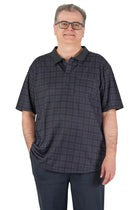
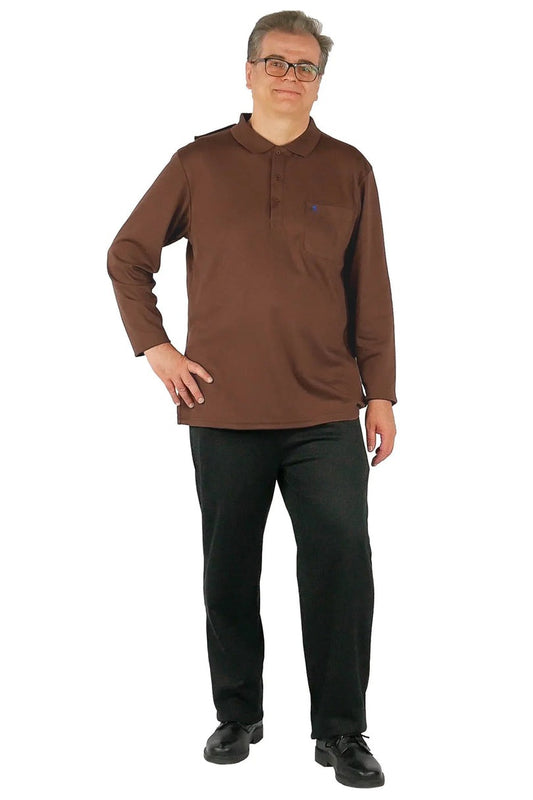
Individuals all over the world struggle with clothing and being able to wear stylish clothing that can fit easily and actually stay comfortable over a long period of time. Let’s take a look at June Adaptive’s large collection of accessible clothing that prioritizes comfort and is easy to wear.

Men’s Adaptive Back-Opening Bamboo Sport Shirt

Men’s Back-Overlap Assisted Dressing Twill Pants

Women’s Adaptive Open-Back Tonal Knit Dress
These accessible but stylish items prove that even if someone has a disability, you can always keep looking great for any occasion.
The community of people who need accessible products is enormous. According to the CDC, 1 in 4 American adults lives with some form of disability. According to research cited by Tilt Beauty and Vogue Business, fewer than 4% of beauty and personal care products are designed to meet the needs of people with physical disabilities. That is an enormous gap between demand and supply, and brands like Rare Beauty and Tilt Beauty are beginning to close it.
The question worth asking is: what comes next? If accessible beauty can be beautiful, functional, refillable, fairly priced, and certified by independent organizations, there is no credible argument that it cannot be the norm. The brands leading that shift deserve recognition, and so do the disability communities whose lived experience made those products possible.
If you enjoyed this blog, please sign up to the June Adaptive Newsletter below to receive more updates! Share your experience in our 5-minute survey to inform our new adaptive apparel launch. Get a chance to win a $50 gift card Link here