Getting dressed is something most of us do without thinking, until the day it becomes a challenge. For the more than 1.1 million Americans currently living with Parkinson's disease, according to the Parkinson's Foundation, that shift can happen gradually, and the frustration it brings is real and significant. Tremors, rigidity, and reduced dexterity can turn an ordinary button into an obstacle that takes minutes to navigate, and that daily friction adds up. At June Adaptive, we believe that clothing should support your life, not complicate it, and adaptive design offers practical, dignified solutions that help people with Parkinson's stay independent for longer.
How Motor Symptoms Impact Buttons, Zippers, and Laces
To understand why adaptive clothing matters so much for people with Parkinson's disease, it helps to understand what is happening in the body. Parkinson's is a progressive neurodegenerative disorder that affects the nervous system and the parts of the body controlled by the nerves. Its hallmark motor symptoms include tremors, or involuntary shaking, muscle rigidity, bradykinesia, which refers to a slowdown in movement speed and amplitude, and postural instability. According to research published in Frontiers in Aging Neuroscience, bradykinesia specifically affects fine hand movements, writing, and other detailed activities of daily life, making tasks that require pinching, threading, or twisting particularly difficult.
Now think about a standard button-down shirt. Buttoning it requires the fingertips to grip a small disc, thread it through a narrow opening, and repeat the motion six or more times, often while the hands are trembling. Or consider a zipper pull on a pair of jeans: small, requiring a pinch grip, and often located at an awkward angle. Shoelaces demand even more coordination, calling for bilateral hand use, fine motor sequencing, and spatial awareness that Parkinson's can compromise at multiple stages of the disease.
These are not minor inconveniences. As the Parkinson's Foundation notes, Parkinson's symptoms such as tremor or dyskinesia can slow down the process of getting dressed significantly, and that difficulty is one of the most frequently reported daily challenges among people living with the condition. When getting dressed becomes a source of frustration, stress, or dependence on a caregiver, it affects not just the morning routine but a person's broader sense of autonomy and self-worth.
The good news is that adaptive clothing was designed precisely for this intersection of style, function, and dignity.
Magnetic Closures and Pull-On Designs That Support Dressing Independence
The single most impactful category of adaptive clothing features for people with Parkinson's is closure design. Traditional buttons, zippers, and laces all require the kind of fine motor coordination that Parkinson's directly compromises. Adaptive alternatives are not workarounds. They are genuinely better solutions.
Magnetic closures are among the most widely recommended adaptive features for people living with Parkinson's. Rather than requiring a button to be threaded through a hole, magnetic closures use concealed magnets on either side of an opening that snap together when brought close. The result is a secure, clean-looking fastener that requires minimal coordination and no pinching or twisting. According to the Parkinson's Foundation's dressing guidance, shirts with velcro or magnetic closures are among the most effective tools for maintaining independent dressing, particularly as symptoms progress. Critically, magnetic closures are typically designed to look identical to traditional button plackets from the outside, preserving the polished appearance many people want to maintain.
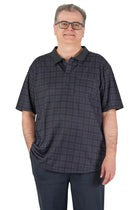
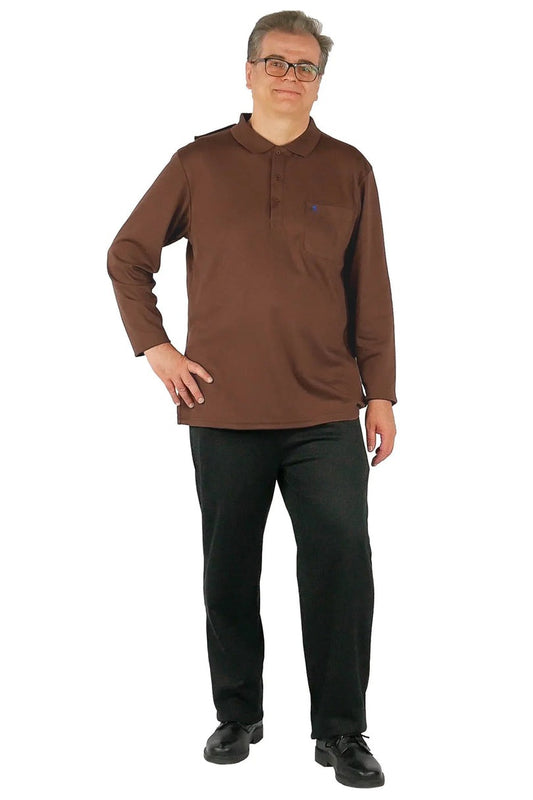
June Adaptive's Men’s Adaptive Back-Opening Bamboo Sport Shirt and Women’s Adaptive Open-Back Tonal Knit Dress are both designed with exactly this in mind. They offer the clean, familiar look of a traditional garment while eliminating the fine motor demands that make standard buttons so frustrating for people with Parkinson's.

Women’s Adaptive Open-Back Tonal Knit Dress

Women's Easy-Access Open-Back Floral Snap Top

Men’s Adaptive Back-Opening Bamboo Sport Shirt
Pull-on designs are equally powerful. Pants with elastic waistbands remove the need for button-and-zipper waistband mechanisms entirely, allowing a person to dress with a simple upward pull. According to occupational therapists at the Michael J. Fox Foundation, adaptive clothing including elastic waistbands and magnetic or velcro closures can make a meaningful difference in both the ease and the safety of the dressing routine for people with Parkinson's.
Here is what to look for in adaptive closure and pull-on designs:
-
Magnetic closures that replace buttons. The best designs hide the magnets behind a traditional-looking placket so the garment looks conventional. Closures should snap securely with a simple approach of the two fabric panels, requiring no threading, pinching, or alignment of buttonholes.
-
Elastic and pull-on waistbands. Look for pants and skirts with full elastic waistbands rather than partial elastic or drawstrings that still require manipulation. The waistband should be wide enough to stay in place and not roll or dig in with movement.
-
Velcro closures as a secondary option. Hook-and-loop velcro works well for people with Parkinson's who are in earlier to moderate stages. It is secure, adjustable, and easy to manage without fine motor coordination. For those in later stages, magnets often require even less effort.
-
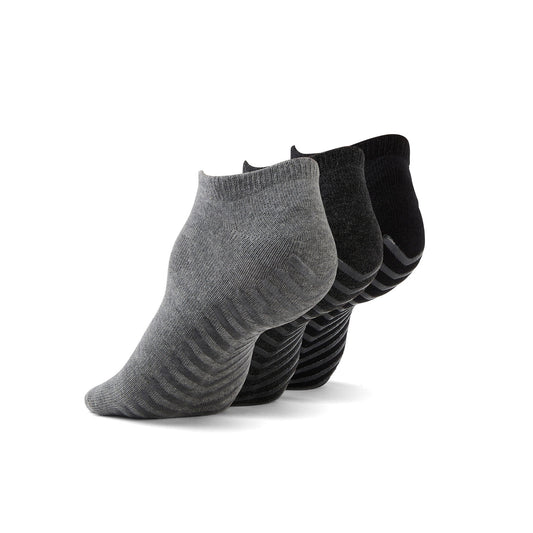
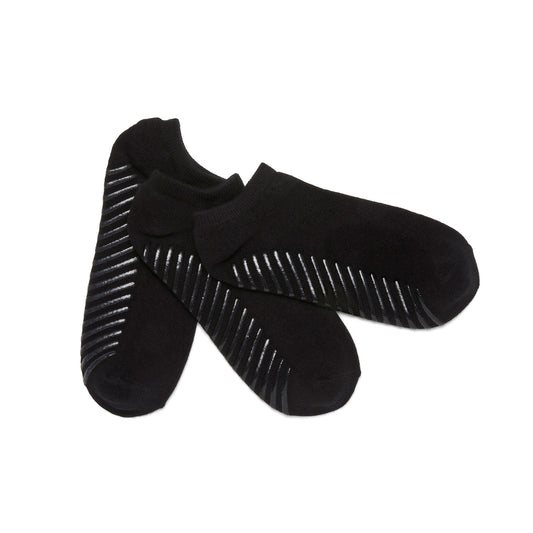
Slip-on footwear. Shoes with elastic laces, velcro straps, or slip-on designs eliminate the need to tie and untie laces, one of the most coordination-intensive dressing tasks. The Parkinson's Foundation also notes that supportive shoes with textured insoles can positively impact postural stability, making footwear choice both a dressing accessibility and a safety decision.
Choosing Fabrics That Are Easy to Pull On Without Sticking or Twisting
Closures often get all the attention in adaptive clothing conversations, but fabric choice is equally important and frequently overlooked. For people with Parkinson's, a garment that sticks to skin or twists during dressing can be just as frustrating as a button, and potentially more risky if it causes a loss of balance mid-dressing.
Smooth, lightweight fabrics are significantly easier to pull on and off than textured, heavy, or clingy materials. Fabrics with some stretch, such as those containing spandex or elastane, accommodate limited range of motion without pulling or binding. A shirt that slides easily over the arms and shoulders requires far less effort and coordination than one that catches or bunches.
Here is what fabric selection looks like in practice for Parkinson's-friendly dressing:
-
Smooth outer layers. Fabrics like cotton, rayon blends, and moisture-wicking performance materials tend to slide more easily over skin and undergarments than textures like tweed, raw denim, or thick fleece. Smooth fabrics reduce the friction that can make pulling a garment over the head or up the legs more difficult.
-
Stretch fabrics for bottoms. Pants and leggings with stretch fabric accommodate the slower, less fluid movements that Parkinson's can cause without creating resistance during dressing. A small percentage of elastane in the fabric blend makes a meaningful practical difference.
-
Lightweight layers. Heavy fabrics are harder to manage and can feel restrictive during the dressing process. Lighter fabrics are easier to guide into position and require less effort to adjust once on. For warmth, layering lighter pieces is more manageable than relying on a single heavy garment.
-
Tagless and seamless designs. For people with Parkinson's who also experience sensory sensitivity, which can sometimes accompany the condition, internal tags and prominent seams can cause discomfort throughout the day. Tagless labels and flat-seam construction eliminate that source of distraction and irritation.
A thoughtful fabric choice does not have to sacrifice style. June Adaptive's clothing line prioritizes both comfort and aesthetic, recognizing that feeling good in what you wear is part of what makes independent dressing worth achieving.
Clothing That Supports Safe Movement and Reduces Tripping Hazards
Parkinson's disease significantly increases the risk of falls. According to the Parkinson's Foundation, falling is one of the most serious concerns associated with the condition, and balance difficulties, freezing of gait, and postural instability all contribute to that risk. What many people do not consider is that clothing choices directly affect fall risk, both during dressing and throughout the day.
Ill-fitting trousers that drag along the floor are a real tripping hazard. Wide, unstructured hems on pants can catch on footwear or furniture. Loose robes or long nightgowns worn during nighttime bathroom trips, a common and often unaddressed situation, can bunch around the feet or catch on bedding. Clothing that shifts out of place during movement can become distracting at exactly the moment when focus on gait and balance is most important.
Adaptive clothing designed with Parkinson's in mind addresses these risks through thoughtful construction. Pants with properly proportioned inseams and hems that sit at the right length reduce floor drag without requiring alteration. Fitted but non-restrictive silhouettes in tops and bottoms minimize the excess fabric that can catch or bunch during movement. Elastic waistbands that sit securely at the natural waist stay put during walking, sitting, and standing transitions.
Footwear is a particularly important piece of the safety equation. Slip-on shoes and shoes with secure closures eliminate the tripping hazard of untied or loosely tied laces, while supportive soles and low heels provide the stability that Parkinson's balance challenges require. Avoiding footwear with thick, uneven soles or significant heel-to-toe drop is generally recommended for people with gait changes associated with Parkinson's.
Beyond fit and footwear, the process of dressing itself can be made safer with a few environmental adjustments that pair well with adaptive clothing choices. Sitting to dress when possible reduces the balance demands of the task. Dressing in a space with a stable surface within reach, such as the edge of a bed or a sturdy chair, provides a support point if needed. Adaptive clothing that requires minimal overhead reaching or one-foot balancing to step into simplifies the physical demands of the process significantly.
Creating a Parkinson's-Friendly Daily Dressing Routine
Adaptive clothing is most effective when it is part of a broader, intentional dressing routine. A few practical habits, paired with the right wardrobe choices, can transform the morning experience from a source of stress into something that starts the day on a positive note.
The Parkinson's Foundation recommends dressing when medications are working well, meaning timing the dressing routine to coincide with periods of better motor function rather than before medication has taken effect. For many people with Parkinson's, this means building in a little flexibility in the morning schedule and not rushing. Hurrying can increase stress, and stress is known to worsen Parkinson's motor symptoms, creating an avoidable cycle of difficulty.
Organizing the wardrobe with dressing ease in mind is another practical step. Keeping frequently worn items at eye level and within easy reach eliminates the need for overhead stretching or bending. Choosing outfits the night before removes a decision-making demand from the morning and allows garments to be laid out in the order they will be put on. Occupational therapists who work with Parkinson's patients frequently recommend this kind of environmental and routine planning alongside clothing adaptations.
Here is a simple framework for building a Parkinson's-friendly dressing routine:
-
Dress seated whenever possible. Sitting to put on pants, socks, and shoes removes the balance demand of standing on one foot and reduces fall risk during the most physically demanding parts of dressing.
-
Layer strategically. Building a wardrobe around layering with lightweight, adaptive pieces allows for easy temperature regulation without requiring complex over-the-head or behind-the-back maneuvers. June Adaptive's clothing line is designed with layering compatibility in mind.
-
Work with an occupational therapist. According to the Michael J. Fox Foundation, occupational therapists specialize in helping people with Parkinson's choose and use clothing and tools that best suit their lifestyle and needs. A one-time consultation can provide personalized guidance that makes a lasting difference.
-
Choose your dressing environment intentionally. Dressing in a well-lit space with a stable surface nearby, minimal clutter on the floor, and a mirror within view reduces the risk of falls and makes it easier to check that clothing is properly in place before starting the day.
At June Adaptive, every product in our line is designed with these real-world challenges in mind. Independent living is not just a goal. It is a daily practice supported by the right tools, the right environment, and clothing that works with you rather than against you. Whether you are living with Parkinson's yourself or supporting someone who is, adaptive clothing is one of the most practical and dignified investments you can make in that independence.
If you enjoyed this blog, please sign up to the June Adaptive Newsletter below to receive more updates! Share your experience in our 5-minute survey to inform our new adaptive apparel launch. Get a chance to win a $50 gift card Link here