Written by: Hannah Martin
⏳5 minutes of your time could win you a $50 gift card! 🎉Help us design our new adaptive apparel launch by sharing your experience. 👕 Link Here 👈
Introduction
For decades, accessibility in product design was treated like an obligation, like a box on a checklist of compliance, rather than an opportunity for innovation. If you have limited dexterity, visual impairment, or other disabilities, it means you're left struggling with packaging that is seemingly designed for everyone except you. Across all industries from beauty to household goods, accessible packaging is removing that "special accommodation" label and rather creating what it always should have been: a simple good design.
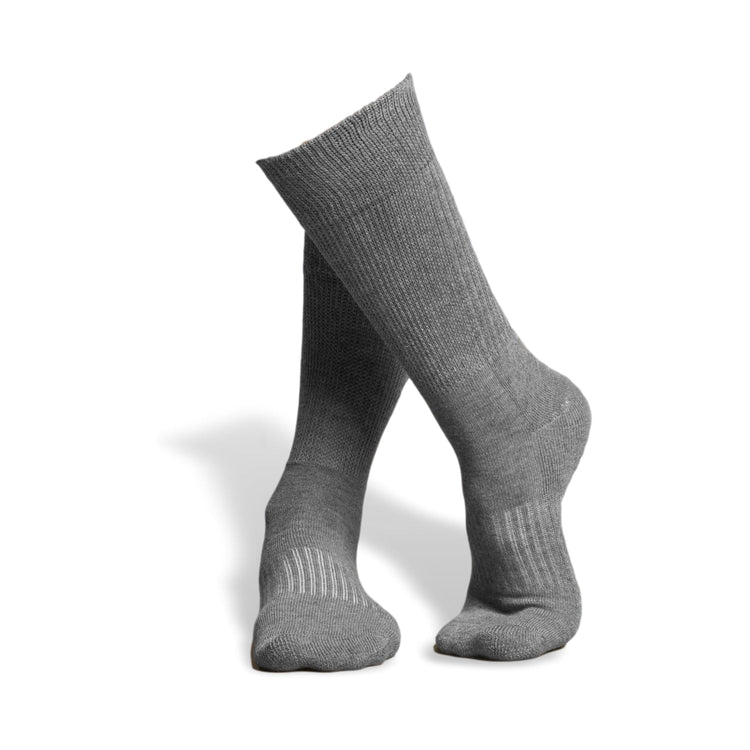
Comfort Crew Anti-Slip Socks 3 Pack
Timeline of Inclusive Design Adoption in Consumer Hygiene Products
Now, the journey toward truly inclusive packaging doesn’t happen overnight, and it's worth understanding how we actually got here.
Let's go back to the early 2000s which marked the beginning of a change. Brands began to acknowledge that usability mattered to people of all abilities. These early adaptations were simple yet meaningful, including easier-to-grip bottle caps, one-handed pump dispensers, and larger pull tabs on packaging. The focus was mostly on mobility challenges, addressing the needs of people with arthritis, limited hand strength, or coordination difficulties.
As we moved through the 2010s, the conversation expanded. Innovation began incorporating sensory and cognitive accessibility alongside physical considerations. Brands introduced tactile markers to help distinguish between products (those little bumps on shampoo bottles that differ from conditioner? That's no accident! In fact, go to your shower now. Do you notice them?). Color contrast improved. Layouts became more intuitive. The "barrier" to usability began to decline.
But perhaps the most significant shift came from a change in perspective. By the mid-2010s, disability advocates, designers, and consumers had begun reshaping the entire narrative around accessibility. It wasn't just a medical concern or a functional checkbox. It was recognized as a cornerstone of good design. And what followed has been nothing short of revolutionary.
Landmark Moments: Rare Beauty, Tilt Beauty, and P&G Innovations
Some brands deserve particular recognition for demonstrating that inclusive design and aesthetic excellence aren't merely compatible; they're complementary.
When Selena Gomez launched Rare Beauty in 2020, she made waves not just for celebrity involvement but for thoughtful design choices that centred accessibility from day one. The brand's rounded caps and ergonomic bottle shapes weren't added as an afterthought; they were fundamental to the product identity. For people with limited dexterity (whether from arthritis, tremors, or conditions like cerebral palsy), these seemingly simple design choices transformed the experience from frustrating to effortless. And here's the thing: the packaging didn't look "medical" or "utilitarian." It was gorgeous, Instagram-worthy, and desirable. Rare Beauty proved that you don't have to sacrifice aesthetics to prioritize accessibility.
Tilt Beauty took this even further by rethinking the mechanics of how makeup is actually applied. Founded by individuals who understood the challenges of traditional beauty packaging firsthand, the brand introduced innovative designs that accommodate a wide range of mobility differences. Their approach wasn't about adapting existing products (this isn’t always the right move!)but rather it was about reimagining the entire experience from the ground up. What if applicators could work at multiple angles? What if you didn't need precise hand movements to achieve professional results? These questions led to genuinely innovative solutions.
Meanwhile, major players like Procter & Gamble demonstrated that accessible design wasn't just for boutique brands; it could scale across mass-market products as well. P&G has introduced tactile markers on shampoo bottles (to make shower routines easier for people with visual impairments), redesigned deodorant containers with easier-to-use mechanisms, and consistently sought feedback from the disability community to inform its design process. When a company of P&G's size makes these commitments, it sends ripples throughout the entire industry.
Each of these examples illustrates a powerful truth: accessible design and mainstream appeal aren't opposing forces. They're partners in creating products that people actually want to use.
Why Brands Are Moving from Compliance to Genuine Inclusivity
Here's what's really changed: the conversation around accessibility has evolved far beyond compliance checklists and legal requirements.
Today's consumers, disabled and non-disabled alike, expect brands to demonstrate genuine empathy in their design choices. This isn't about meeting ADA standards or avoiding lawsuits (though those matter too!). It's about recognizing a fundamental reality: accessibility benefits everyone, not just people with diagnosed disabilities.
Think about it. Is that easy-open package designed for someone with arthritis? It's also appreciated by the parent juggling a baby and groceries, the person recovering from a sports injury, or anyone who's ever struggled to open packaging with wet hands. High-contrast labels that help people with low vision? They're easier for everyone to read in dim lighting. Tactile markers? Useful in the shower when your eyes are closed and soapy.
This realization, sometimes known as the "curb cut effect," after sidewalk curb cuts that help wheelchair users but also benefit strollers, rolling luggage, and delivery carts, has been highly transformative. Brands are beginning to understand that designing for the margins actually improves the experience for the majority.
But wait! There's another crucial element driving this shift, authenticity. Leading brands are now prioritizing lived experience in their design process, actively collaborating with disabled creators, consultants, and advocacy organizations. They're conducting user testing with diverse groups. They're hiring disabled designers and listening to their insights. They're building ongoing relationships with disability communities rather than treating accessibility as a one-time project.
For many brands, this represents a fundamental shift in values. Inclusivity isn't a marketing angle or a corporate social responsibility initiative; it is even woven into their DNA. Consumers can distinguish genuine commitment from performative gestures.
Market Research Showing Disabled Consumers Drive Design Innovation
Let's talk numbers, because the business case here is compelling.
The global disability community represents over 1.3 billion people—that's roughly 16% of the world's population. When you factor in family members, caregivers, and the extended networks that support individuals with disabilities, the spending power of this market exceeds $8 trillion globally. That's not a niche market. That's an economic force that companies ignore at their peril.
But the influence of disabled consumers goes far beyond purchasing power. Research consistently shows that this community actively drives design innovation across industries. But why? Because disabled people are expert problem-solvers by necessity. They identify pain points that others might overlook. They imagine creative solutions because the status quo often doesn't work for them. When brands tap into this expertise, they don't just serve disabled customers better, but they innovate in ways that benefit everyone.
Here's where it gets really interesting, so listen up! Products tested for accessibility often score higher on overall customer satisfaction, usability, and brand loyalty across all demographics. A study by Accenture found that companies that championed disability inclusion achieved, on average, 28% higher revenue, twice the net income, and 30% higher economic profit margins than their peers. When disabled people are part of the design conversation from the beginning, the resulting innovations tend to be more intuitive, more user-friendly, and more successful in the marketplace.
The lesson? Designing for disability isn't limiting; it can be liberating. It pushes companies to question assumptions, challenge conventions, and create genuinely better products (exactly what the world needs!).
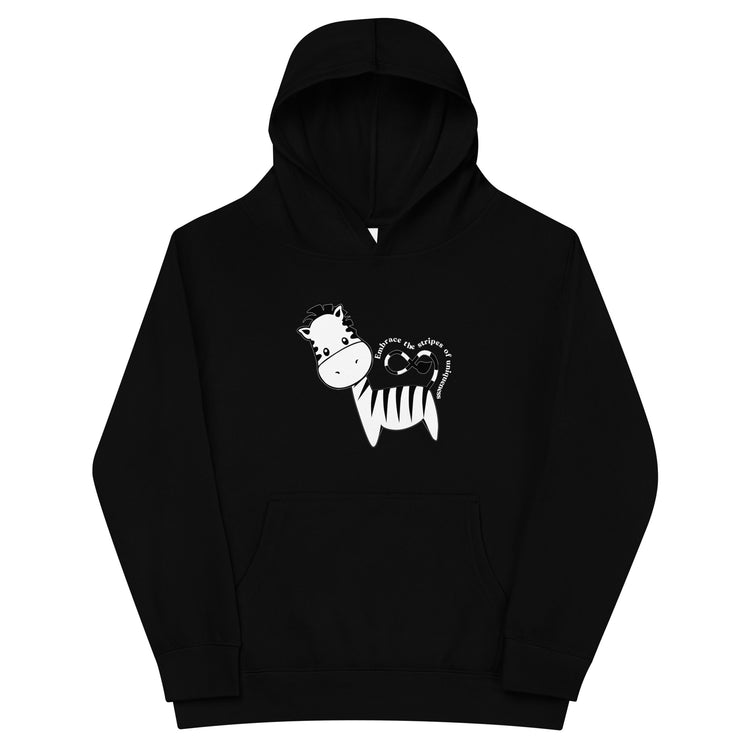
Embrace the Stripes of Uniqueness Kids Hoodie
The Business Case for Accessible Packaging Beyond Ethics
While inclusivity is undoubtedly a moral imperative, let's be honest: businesses need to understand the bottom-line benefits too. And those benefits are substantial.
First, accessible packaging expands your potential customer base. We've already discussed the size of the disability market, but consider also the aging population. By 2030, all Baby Boomers will be over 65, and age-related changes in vision, dexterity, and strength will make accessible packaging increasingly relevant to a massive demographic. Brands that adapt now will be positioned perfectly for this demographic shift.
Second, accessible design enhances user satisfaction across the board. When packaging is easier to open, read, and use, everyone benefits. This results in fewer product returns, fewer customer service inquiries, and higher repeat purchase rates. It also generates positive word-of-mouth,people love to share discoveries about products that "just work”!!
Third, accessibility differentiates brands in competitive markets. In categories where products are relatively similar, packaging can be a decisive factor. Consumers increasingly make purchasing decisions based on brand values and user experience. A commitment to accessibility signals that a brand cares about real people, not just sales figures.
Fourth, inclusive design often drives broader innovation. When you design for edge cases, you're forced to think more creatively and holistically about the entire user experience. This can lead to breakthrough innovations that create entirely new product categories or redefine existing ones.
Finally, there's the reputational benefit. In an era of social media and heightened consumer awareness, brands are being held accountable for their values in unprecedented ways. Companies that lead on accessibility build stronger brand loyalty, attract top talent who want to work for values-driven organizations, and position themselves as industry leaders rather than followers.
Think of accessibility like sustainability, it started as a value-driven choice championed by a passionate minority, and it's now a central market expectation. The trajectory is clear, accessible design is moving from "nice to have" to "must have."
Designing for Everyone
At its heart, the evolution of accessible packaging reminds us of a simple but powerful truth: design that includes everyone is design that works better for all.
We're witnessing a fundamental reimagining of what "mainstream" means. Instead of designing for some mythical "average" user and then trying to accommodate everyone else as an afterthought, leading brands are recognizing that diversity is the norm. There is no average user. There are only real people with varied needs, abilities, and preferences.
The companies leading this charge aren't just designing better bottles and boxes. They're shaping a more inclusive economy and, ultimately, a more equitable society. They're proving that accessibility isn't about lowering standards, it's about raising them. And they're showing that when you design with empathy and intention, everyone wins!
The evolution is far from complete, of course. There's still work to be done, innovations to be made, and barriers to be broken down. But the momentum is undeniable. Accessible packaging is no longer the exception; it’s becoming the standard (a HUGE win!). That's something worth celebrating.
If you enjoyed this blog, please sign up to the June Adaptive Newsletter below to receive more updates!
Share your experience in our 5-minute survey to inform our new adaptive apparel launch. Get a chance to win a $50 gift card Link here