The Power of Clothing in Disability Inclusion
⏳5 minutes of your time could win you a $50 gift card! 🎉Help us design our new adaptive apparel launch by sharing your experience. 👕 Link Here 👈
Clothing is one of the first ways people express who they are, what they value, and how they want to move through the world. For people with disabilities, fashion can also shape comfort, independence, dignity, and inclusion in everyday life. Adaptive clothing is not only about solving dressing challenges—it is about challenging the idea that accessibility and style are separate. At June Adaptive, we believe inclusive fashion can help change how society sees disability, one thoughtful design at a time.
How fashion helps challenge societal perceptions of disability
For too long, disability has often been framed through limitation rather than possibility. In everyday culture, clothing has played a quiet but powerful role in reinforcing that pattern. When mainstream fashion rarely includes disabled people, wheelchair users, people with limb differences, people with dexterity challenges, sensory sensitivities, chronic illness, or mobility needs, it sends an unspoken message: style was not designed with everyone in mind.
Adaptive fashion helps shift that message.
When someone can choose clothing that fits their body, supports their needs, and reflects their personal taste, the conversation changes. Instead of seeing disability as something that requires compromise, adaptive clothing shows that access can be creative, modern, expressive, and beautiful.
Think about the difference between a garment that simply “works” and one that makes someone feel like themselves. A pair of pants with side zippers can make dressing easier for a wheelchair user or someone recovering from surgery. A top with an open-back design can support assisted dressing while still looking polished and intentional. Magnetic closures, pull tabs, elastic waistbands, sensory-friendly fabrics, and seated-fit designs are not just functional details—they are design choices that acknowledge real bodies and real lives.
Inclusive clothing can challenge stereotypes in a few important ways:
-
It makes disability visible in a positive way. When adaptive clothing is represented as stylish, modern, and desirable, disability becomes part of everyday fashion—not an exception to it.
-
It expands the definition of good design. A well-designed garment should consider how people put it on, sit in it, move in it, wash it, fasten it, and feel in it.
-
It gives people more control over self-expression. Clothing can help people decide how they want to be seen, whether that means professional, bold, relaxed, elegant, sporty, or comfortable.
-
It reminds society that accessibility benefits more than one group. Features created for disability inclusion often help caregivers, older adults, people recovering from injuries, and anyone who wants easier, more comfortable clothing.
This is the heart of inclusive fashion: clothing should not ask people to adapt themselves to the garment. The garment should adapt to people.
Representation of adaptive wear in media and advertising
Representation matters because people often believe what they repeatedly see. If advertising only shows one type of body, one type of movement, or one version of beauty, it narrows the public imagination. It can also make disabled consumers feel invisible, even when they are a major part of the population.
In the U.S., disability is a common part of life. Millions of adults live with disabilities that affect mobility, cognition, hearing, vision, self-care, independent living, or other daily activities. Yet disability representation in fashion and advertising has historically been limited, inconsistent, or overly focused on inspiration rather than everyday identity.
That is changing, but there is still work to do.
More campaigns now include disabled models, adaptive apparel, mobility devices, prosthetics, service animals, and visible accessibility features. This matters because representation should not be limited to medical settings, charity campaigns, or special awareness days. Disabled people shop, work, date, travel, exercise, attend weddings, lead teams, go to school, raise families, and build personal style like everyone else.
Strong representation does more than place a disabled model in a photo. It considers the full story being told.
A truly inclusive fashion campaign asks:
-
Is disability shown naturally, without pity or exaggeration?
-
Are disabled people styled with the same creativity and care as everyone else?
-
Are adaptive features visible and explained in a way that feels empowering?
-
Were disabled people involved behind the scenes as models, consultants, designers, writers, photographers, or decision-makers?
-
Does the campaign reflect different disabilities, ages, sizes, races, genders, and lifestyles?
When media gets representation right, it helps normalize adaptive fashion. A wheelchair user wearing a beautifully designed jacket should not feel unusual. A person with limited dexterity using magnetic closures should not be treated as a niche story. Someone choosing open-back clothing, easy-on shoes, or sensory-friendly fabrics should be able to see those options reflected in everyday shopping experiences.
At its best, representation does not say, “Look how different this person is.” It says, “This person belongs here.”
That message is powerful. It helps customers imagine themselves in the clothing. It helps brands understand who they have been leaving out. And it helps society move away from outdated ideas about disability, beauty, and independence.
Collaborations that spotlight inclusivity
Inclusive fashion becomes stronger when it is shaped by collaboration. No brand, designer, or campaign can fully understand accessibility needs without listening to the people who experience them. That is why some of the most meaningful progress in adaptive fashion comes from partnerships between brands, disabled consumers, caregivers, occupational therapists, advocates, designers, and accessibility experts.
The best collaborations are not one-time gestures. They involve ongoing feedback, testing, revision, and respect.
A designer might start with a beautiful idea, but a wheelchair user may point out that a back pocket creates pressure while seated. A caregiver may explain that a closure is still too small to manage during assisted dressing. A person with sensory sensitivities may notice that a seam, tag, or fabric texture makes the garment difficult to wear. Someone with arthritis may appreciate the look of a shirt but struggle with tiny buttons.
These details matter. They are the difference between clothing that sounds inclusive and clothing that actually works.
Meaningful collaboration can include:
-
Co-design with disabled consumers: Involving people with lived experience from the earliest stages of product development, not only after a design is finished.
-
Fit testing across real scenarios: Testing clothing while sitting, transferring, reaching, dressing independently, dressing with assistance, and wearing garments for longer periods.
-
Feedback from caregivers and support networks: Understanding the practical dressing challenges that happen at home, in hospitals, in long-term care settings, and during recovery.
-
Partnerships with advocates and community organizations: Learning from people already working to improve disability inclusion across fashion, employment, healthcare, and daily life.
Collaboration also helps avoid the common mistake of treating accessibility as a trend. Disability inclusion is not a seasonal theme. It is a long-term commitment to designing with people, not just for them.
For brands, this means being willing to learn publicly and improve continuously. For customers, it means having more clothing options that reflect actual needs. For the fashion industry, it means expanding the creative process so accessibility is considered part of excellence—not an add-on.
June Adaptive’s approach is rooted in this belief. Adaptive fashion should be informed by the people who wear it. Every zipper placement, closure choice, waistband, fabric, opening, and fit detail can influence someone’s comfort and independence. Listening closely is not just good customer service—it is good design.
Designing beyond function—style that celebrates identity
A common misconception about adaptive clothing is that function is the only priority. Function is essential, of course. Clothing should be easier to put on, more comfortable to wear, and better suited to the realities of different bodies and abilities. But function alone is not enough.
People do not want to be reduced to their needs. They want choices.
A person looking for adaptive clothing may still care about color, silhouette, fabric, trend, occasion, and personality. They may want something professional for work, cozy for recovery, stylish for dinner, casual for errands, or elegant for an event. They may want clothing that blends in, stands out, or does both depending on the day.
Adaptive design should support that range.
Designing beyond function means asking not only, “Can someone wear this?” but also, “Will they want to wear this?”
This is where inclusive innovation becomes exciting. A magnetic closure can be practical and sleek. A side zipper can be discreet and modern. An open-back top can be soft, polished, and thoughtfully cut. A seated-fit pant can look like a wardrobe staple while reducing discomfort. An easy-on shoe can still feel current and stylish.
Identity is not separate from accessibility. It is part of it.
For many disabled people, clothing can affect how they feel entering a room. It can influence confidence at work, comfort at school, ease during travel, and dignity during medical recovery. When clothing fits well and feels good, it can reduce stress before the day even begins.
That matters because getting dressed is not just a task. It is a daily ritual. It is one of the first choices a person makes before facing the world.
Adaptive fashion should make that choice feel empowering.
It should also recognize that disability is not one experience. Some people want visible adaptive features because they are proud of them. Others prefer discreet details that look like mainstream fashion. Some need clothing for seated comfort. Others need easier closures, wider openings, softer fabrics, or designs that support assisted dressing. Some needs are permanent, while others are temporary due to injury, surgery, pregnancy, aging, or recovery.
The future of adaptive fashion is not one “adaptive look.” It is a wider closet of possibilities.
Raising awareness through inclusive fashion campaigns
Inclusive fashion campaigns can do more than sell clothing. They can educate, challenge assumptions, and invite people into a broader conversation about accessibility.
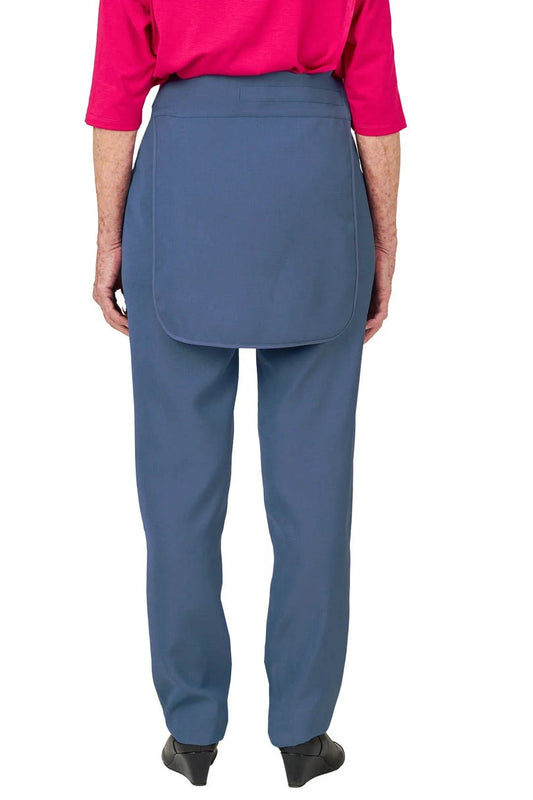
A strong campaign can help someone understand why a back-overlap design matters. It can show why seated-fit clothing is different from simply sizing up. It can explain how magnetic closures support people with limited hand mobility. It can highlight why sensory-friendly fabrics are not just a preference for some shoppers, but a necessity.
Awareness matters because many accessibility barriers are invisible to people who do not experience them. Someone may not realize that a traditional zipper can be difficult for a person with arthritis, tremors, or limited grip strength. They may not think about how a waistband feels after hours of sitting in a wheelchair. They may not understand why buttons, tags, seams, tight cuffs, or narrow shoe openings can create daily frustration.
Inclusive campaigns make those realities easier to understand.
They also help shift responsibility. Instead of framing disabled people as needing to “figure it out,” inclusive fashion asks designers, brands, retailers, and consumers to think differently. The question becomes: how can the world be designed to include more people from the start?
Practical awareness can show up in many ways:
-
Educational product storytelling: Explaining adaptive features clearly so shoppers understand who they support and why they matter.
-
Inclusive photography and video: Showing garments on disabled models in everyday settings, not only clinical or overly staged environments.
-
Community-led campaigns: Letting disabled people share their own experiences, preferences, frustrations, and style choices in their own words.
Awareness campaigns are especially powerful when they balance honesty with optimism. The goal is not to make accessibility feel heavy or complicated. The goal is to make inclusion feel possible, practical, and necessary.
For June Adaptive, this means creating content and products that help people feel seen. It means treating adaptive clothing as part of a larger movement toward dignity, independence, and self-expression. It means helping customers find clothing that works for real life while also encouraging the fashion industry to raise its standards.
Because when fashion becomes more inclusive, everyone gains. Families gain better options for loved ones. Caregivers gain tools that make dressing easier and more respectful. Older adults gain clothing that supports changing mobility and comfort needs. People recovering from surgery gain designs that reduce strain. Disabled consumers gain more choice, visibility, and control.
And society gains a better understanding of what inclusion actually looks like.
Take a look at some of our wonderful products that ensure that comfort and accessibility is possible.
Women’s Adaptive Open-Back Tonal Knit Dress
Women’s Back-Overlap Assisted Dressing Adaptive Knit Pants
Women’s Side-Opening Easy Dressing Elastic Waist Pants
Conclusion
Clothing has power because it sits at the intersection of identity, comfort, access, and culture. Adaptive fashion shows that disability inclusion is not only about ramps, policies, or technology; it is also about the everyday products people use to live with confidence and dignity. When fashion includes disabled people in design, media, advertising, and storytelling, it helps challenge outdated perceptions and opens the door to a more inclusive future.
At June Adaptive, we believe accessibility should never require sacrificing style. Clothing should support independence, celebrate identity, and reflect the full diversity of the people who wear it.
If you enjoyed this blog, please sign up to the June Adaptive Newsletter below to receive more updates! Share your experience in our 5-minute survey to inform our new adaptive apparel launch. Get a chance to win a $50 gift card Link here